
A Call for Radical Change in Health, Environment, and the Textile Industry with Rosalie Mann and Dario Casalini
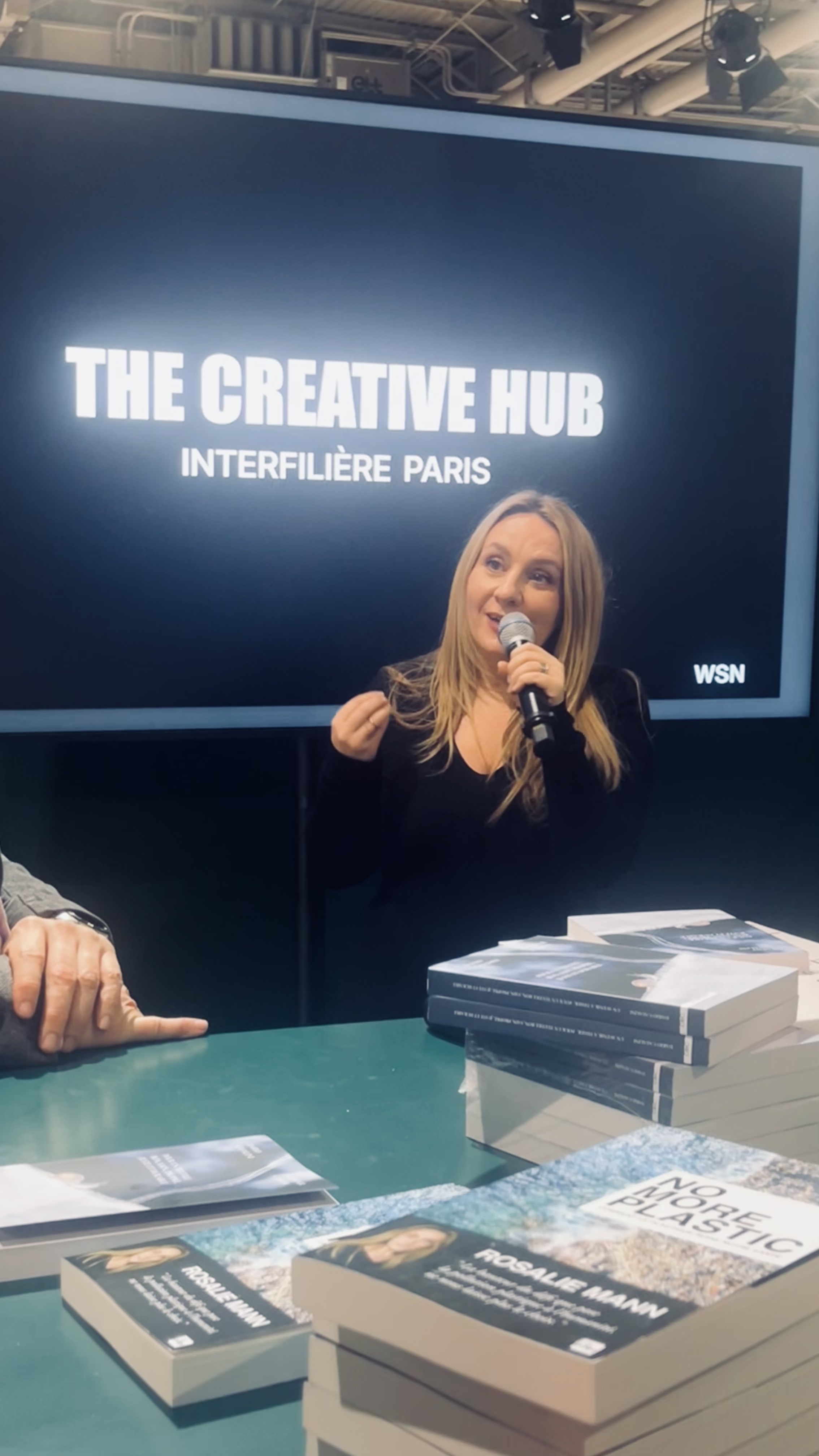
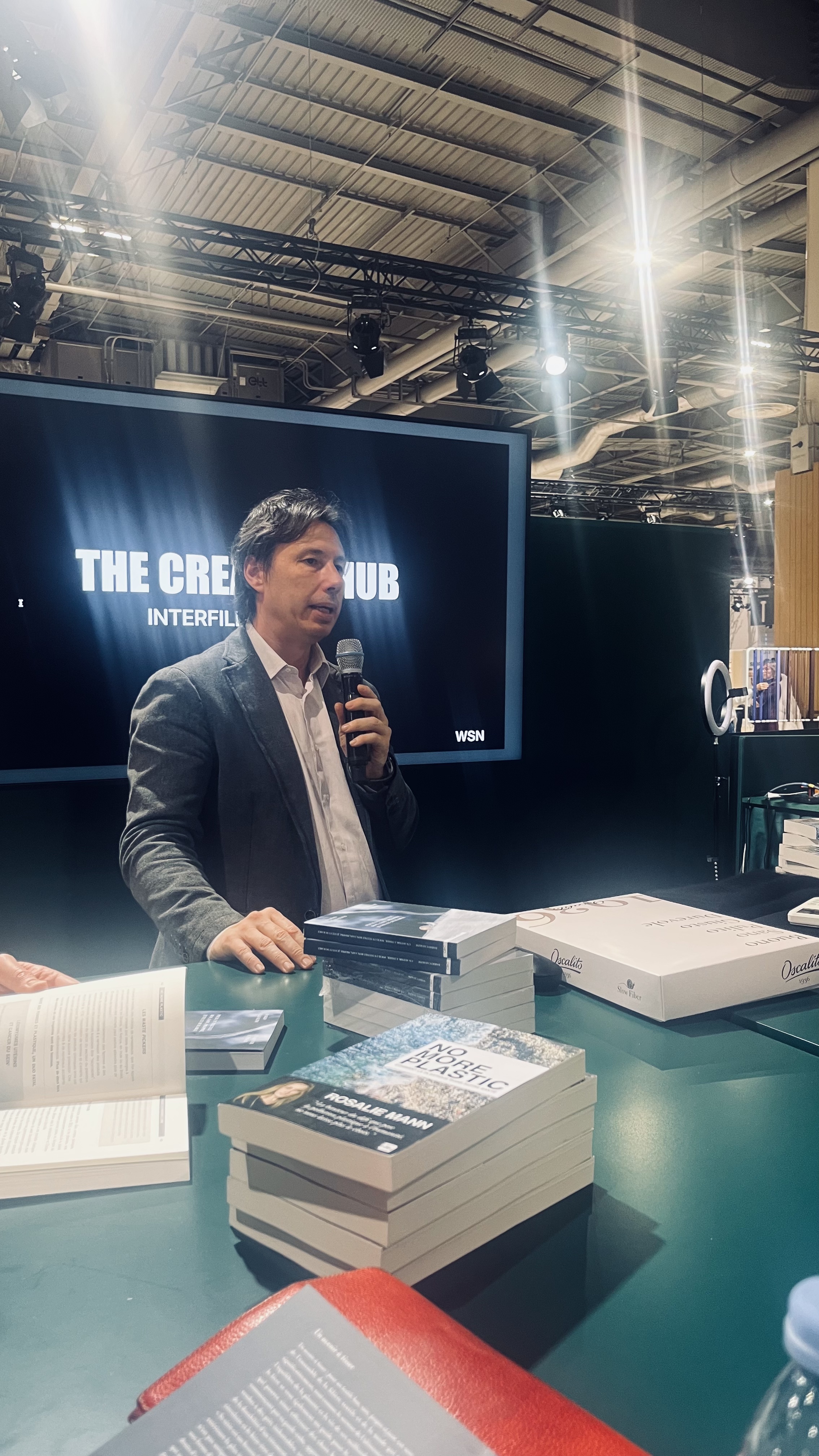
Day 1 at Interfilière Paris kicked off with vibrant energy, as The Creative Hub became a dynamic space for innovation and idea exchange. A key highlight was the engaging book signing and discussion featuring Rosalie Mann, founder of the No-More Plastics Foundation, and Dario Casalini, founder of Slow Fiber Italy. They shared insights from their respective books, “No More Plastic: How Plastic is Ruining Our Health” and “Un avenir à tisser: Pour un textile bon, sain, proper, juste et durable”
A Mother’s Plea
Rosalie’s journey began as a personal mission to save her son, whose severe asthma was believed to be triggered by environmental pollution. Over time, this mission grew into an NGO dedicated to addressing the systemic problem of plastic pollution.
She highlighted the “butterfly effect” of plastics on our lives, from the macro-level waste we see in oceans to the invisible, insidious micro and nano-plastics that enter our air, water, and bodies. Rosalie described how she stopped swimming in the Mediterranean because of its high plastic contamination—a sad reminder of how even natural sanctuaries are no longer safe.
The Hidden Dangers of Micro and Nano-Plastics
The visible plastic waste we see is only the tip of the iceberg. Micro and nano-plastics are now pervasive, entering our bodies through the air we breathe, the water we drink, and even the clothes we wear. Women, in particular, are more vulnerable due to hormonal cycles and the presence of endocrine disruptors from plastic exposure. These pollutants have been linked to rising cancer rates, infertility, and other serious health issues.
Rosalie pointed out a shocking fact: human brain tissue is now found to contain micro-plastics (Yale Environment 360). The long-term effects are still being studied, but the precautionary principle should drive action.
Plastics, Climate, and Public Health
Plastics don’t just harm human health—they exacerbate climate change. Micro and nano-plastics amplify fires, heat waves, and other natural disasters. The impact on public health and the environment is interconnected, but policies often fail to reflect this complexity.
To truly decarbonize, we must also de-plastify. It’s not enough to replace fossil fuels; we need to rethink the materials we use daily.
The Problem with Plastic Recycling
One of the most jarring insights was that recycled plastics are often more toxic than virgin plastics. The global production of plastic, currently at 460 million tons annually, is driven primarily by packaging and textiles, which account for 50% of the problem. Worse, plastic recycling has been largely exposed as greenwashing—it perpetuates the myth that we can keep consuming plastics without consequence.
Rosalie emphasized the urgent need for a radical transformation in how we package goods. She highlighted algae as a sustainable alternative to synthetic plastics, particularly in food packaging. Unlike sugar cane, which relies heavily on pesticides, algae offers a cleaner and increasingly abundant resource, especially as climate change accelerates its growth. She pointed out that Mayotte could serve as an ideal location for France to spearhead a “seaweed revolution,” given that the country ranks as the world’s second-largest maritime power. France has the potential to lead in this field, yet innovators often lack sufficient support domestically and are forced to seek backing abroad. Notable examples include groundbreaking projects like Notpla, which had to develop their ideas internationally.
Dario’s Perspective: Slow Fiber
Dario Casalini brought the textile industry into focus, likening the current challenges to the early days of the slow food movement. The textile industry’s obsession with volume over quality has led to a global exploitation of resources and people.
He emphasized that sustainability isn’t just about reducing environmental impact but also about rethinking consumption and waste disposal. The philosophy of “less but better” should guide both producers and consumers.
Dario’s Slow Fiber initiative aims to create a global network of ethical textile companies, starting in Italy. The goal is to educate consumers about the true cost of their clothing and make manufacturing an attractive career path for younger generations.
Misleading Metrics and the Fight for Better Standards
Both Rosalie and Dario highlighted the flaws in the EU’s Product Environmental Footprint (PEF), which currently gives high scores to polyester while unfairly penalizing natural fibers like organic cotton, linen and wool. The calculations fail to account for critical factors like biodiversity and the lifecycle of materials.
Her foundation is pushing to update these metrics to reflect the true environmental and health impacts of materials. For example, wool fibers don’t produce the same harmful nano-particles as synthetic materials, yet this isn’t considered in the current scoring system.
A Call for Radical Change
We no longer have the luxury of small, incremental changes. Recent research highlights a 79% increase in cancer diagnoses among individuals under 50 globally from 1990 to 2019 (The Guardian).
While plastics have been linked to potential health risks, such as hormonal disruption and exposure to microplastics, the direct role of plastics in this surge in cancer rates remains under investigation. However, the broader impact of plastics on human health and the environment is undeniable, reinforcing the urgent need for systemic change.
Both Rosalie and Dario stressed that the solutions exist. We have alternatives to plastics and the technology to implement them. What’s lacking is the political will and public awareness to drive meaningful change.
What Can We Do?
Support innovation: Seek out products and brands that prioritize natural, non-toxic materials like wool, algae, and glass.
Educate yourself: Learn about the hidden impacts of plastics and push for transparency in product labeling.
Advocate for policy change: Demand stricter regulations on plastic production and investment in alternative materials.
Rethink consumption: Buy less, buy better, and consider the end-of-life impact of everything you purchase.
Rosalie left us with a powerful thought: “If we reduce plastic production by 40%, we can return to 2017 consumption levels. It’s not impossible; it’s a choice.”
The question is, will we make that choice before it’s too late?
Rosalie Mann No more plastic: how plastic is ruining our health
Dario Casalini Un avenir à tisser: Pour un textile bon, sain, proper, just let durable
